
The cost of a carnivore diet varies, heavily influenced by meat prices. Choosing between grass-fed beef and conventional beef affects your budget, with grass-fed typically more expensive but also more nutritious.
You can save by opting for organ meats and less popular cuts. Organic meats also command a higher price, though they’re healthier and ethically better. Buying in bulk, selecting cost-effective cuts, and freezing meat can greatly reduce expenses.
Budget-friendly strategies include shopping smart, buying from local sources, and emphasizing nutritional value. With insightful strategies, you’ll uncover ways to follow a carnivore diet without breaking the bank.
Meat Matters: Understanding Price Variances and Quality Choices
When starting on a carnivore diet, you’ll quickly discover that meat prices can vary widely, influenced by factors such as meat quality, source, and specific cuts. Grass-fed beef, often sought for its health benefits, commands a higher price per pound compared to its grain-fed counterparts.
Yet, if you’re eyeing cost savings without compromising nutrition, organ meats emerge as a wallet-friendly and nutrient-dense option. The cost of your carnivore diet can swing substantially based on these choices.
Organic Vs Conventional
After examining the cost variances among different cuts and types of meat, it’s essential to ponder how the selection between organic and conventional meat influences your carnivore diet expenditures.
Organic meat, while pricier due to higher production costs and certification requirements, is favored for its health benefits and environmentally sustainable practices. It’s free from hormones, antibiotics, and pesticides, presenting a cleaner option for your plate.
On the flip side, conventional meat is more accessible and aligns better with a tight budget, offering cost savings to those prioritizing affordability. Your choice hinges on personal preferences, budget constraints, and health considerations.
Weighing the pros and cons, it’s vital to decide what aligns best with your dietary goals and financial limits.
Grass-Fed Benefits
Choosing grass-fed meat for your carnivore diet offers significant health and environmental advantages, including higher levels of beneficial omega-3 fatty acids and a leaner protein source.
Grass-fed meat not only packs in more omega-3 fatty acids, essential for heart health, but it’s also leaner and lower in overall fat than its grain-fed counterparts. This means you’re getting a high-quality protein that’s lighter on calories and fat.
Furthermore, because grass-fed animals are raised without antibiotics or hormones and in more natural environments, the meat you’re consuming is cleaner and boasts a higher nutrient density.

Elevate Your Carnivore Lifestyle with ButcherBox's Premium Quality Meats
Experience Unparalleled Taste and Convenience – Click Here to Get Your High-Quality Meats Delivered!
Order Superior Meats NowAnd let’s not overlook the environmental aspect; sustainable farming practices associated with grass-fed meat production have a more favorable impact on the environment. So, by choosing grass-fed, you’re not just nourishing your body—you’re also supporting the planet.
Bulk Buying Brilliance: Stocking Up for Savings
Now, let’s talk about how buying meat in wholesale quantities and mastering freezer storage can be game changers for your carnivore diet.
By purchasing meat in bulk, you’re not just saving money; you’re also ensuring you always have your diet staples at hand.
These strategies, when executed well, can greatly lower your carnivore diet costs over time.
Wholesale Meat Purchases
To save money on your carnivore diet, consider wholesale meat purchases as a savvy bulk buying strategy. By opting for bulk buying, you greatly reduce the per-pound cost of meat, making your dietary choice more sustainable in the long run.
Wholesale purchases are especially cost-effective for those committed to a carnivore diet. This approach not only allows for stocking up on carnivore diet staples at lower prices but also guarantees a steady supply of essential proteins.
Engaging in bulk buying strategies by purchasing larger quantities at once opens up the opportunity for volume discounts. This method is instrumental in managing costs efficiently. By securing meat through wholesale purchases, you’re taking a smart step towards maintaining your carnivore diet without breaking the bank.
Freezer Storage Tips
After securing your bulk meat purchases, it’s important to master freezer storage techniques to maximize their shelf life and maintain quality.
Utilizing freezer storage effectively can greatly extend the shelf life of your bulk meat purchases, offering substantial cost savings. Properly packaging your meat in airtight containers or freezer bags is essential to prevent freezer burn. Additionally, labeling packages with dates and contents aids in organization and guarantees you’re using older items first.
A deep freezer is ideal for accommodating larger purchases for long-term storage. Most importantly, following USDA guidelines on safe freezing practices is key to guaranteeing both the quality and safety of your meat.
Mastering these freezer storage tips will ensure your bulk purchases last longer and save you money in the long run.
Cost-Cutting Carnivore Cuisine: Affordable Cuts and Meal Planning
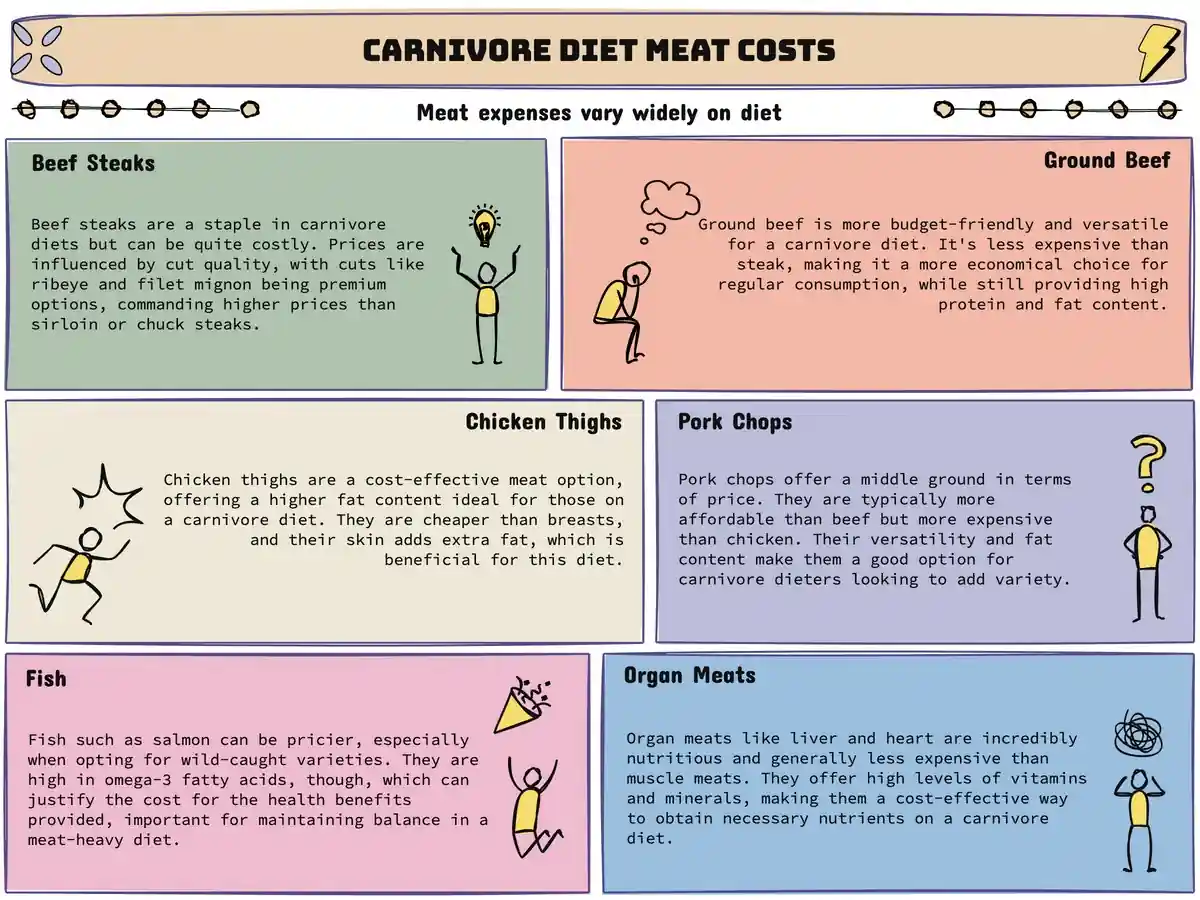
Exploring your way through the carnivore diet, you’ll find that choosing more budget-friendly meat selections like ground beef and chuck steak can greatly reduce your grocery bill.
By purchasing these cost-efficient cuts in bulk, especially when they’re on sale, you can enjoy even greater savings.
This method not only keeps your diet sustainable but also enables you to maintain high nutritional value without compromising on taste or variety.
Affordable Meat Selections
Exploring cost-effective cuts such as ground beef, stew meat, and skirt steak can greatly reduce your grocery bill while adhering to a carnivore diet. Opting for cheaper cuts of meat like chuck steak, bavette, and sirloin, which range from $7 to $10 per pound, can save money without sacrificing quality.
Ground beef stands out as a versatile choice for budget-friendly meals. When buying meat, it’s smart to compare prices at your local farm or grocery store and monitor market sales.
This strategy can considerably lower your food budget.
Additionally, choosing grain-fed beef over grass-fed varieties can cut costs by 50-100%. Understanding meat grades also aids in making informed decisions that align with your budget, ensuring you don’t overspend per pound.
Bulk Purchase Benefits
Building on cost-effective meat selections, consider the benefits of purchasing in bulk to further stretch your carnivore diet budget.
Bulk purchases of budget-friendly cuts like ground beef, brisket, and stew meat offer significant discounts, cutting down the cost per pound. This approach not only saves you money but also diversifies your meal preparation options without straining your finances.
By keeping an eye on sales and promotions, you can enhance these savings, making bulk purchases even more appealing. Opting for cheaper cuts in bulk guarantees a steady supply of meat at an affordable price point.
In essence, bulk buying allows you to maintain a high-protein, carnivore diet in a cost-efficient manner, making sure you don’t compromise on variety or quality while managing your expenses effectively.
Meal Planning Tips
To maximize your budget on a carnivore diet, consider meal planning strategies that incorporate bulk buying and selecting cost-effective cuts of meat.
Opt for cheaper cuts like ground beef, brisket, chicken thighs, and pork belly to keep costs down. These high-protein animal products provide both nutrition and satisfaction at a lower price point.
Additionally, purchasing frozen meat can be more cost-effective and allows for longer storage, ensuring you always have something on hand. Engage in comparison shopping at different stores and markets to snag the best deals.
Directly buying from local farmers or markets can also save money, as it often bypasses the middleman.
Dietary Cost Comparison
Comparing the costs of carnivore foods and diet to a traditional diet reveals surprising affordability, especially when opting for meats over processed foods. Switching to animal proteins such as 73/27 ground beef at $5.96, instead of splurging on $9.99 Oreos, can drastically reduce your food expenses.
Similarly, choosing $5.98 heavy whipping cream over a $13.50 Coca Cola offers a budget-friendly alternative. Your shopping list might also favor $5.79 Kirkland Signature Eggs over $6.80 Honey Nut Cheerios, and $4.24 Great Value Thick Cut Bacon rather than $5.50 Doritos, highlighting how a focus on meats rather than processed foods can lower the average monthly benefits.
Even opting for a USDA Choice Top Sirloin Steak at $26.99 over a $21.00 DiGiorno Stuffed Crust Pizza can contribute to a more nutritious diet without the high cost per month.
Reducing Expenses
While the comparison between a carnivore diet and traditional dietary expenses highlights potential savings, there are additional strategies to further reduce your food budget.
Buying meat in bulk and opting for cheaper cuts, like ground beef and chicken thighs, can greatly save money. Don’t shy away from brisket or pork belly, which offer great value.
Shopping around to compare prices at different stores and markets guarantees you’re getting the best deals on your carnivore essentials. Consider frozen meat for its cost-effectiveness and longer shelf life, reducing the need for frequent shopping trips.
Purchasing directly from local farmers or markets might also offer lower prices on whole foods. Smart planning and shopping are key to making the carnivore diet less expensive while maintaining its nutritional benefits.
The Final Bite: Indulge As The Benefits Will Show
To sum up, managing the carnivore diet cost effectively requires understanding meat price variations, choosing between organic and conventional, and recognizing the benefits of grass-fed options.
Bulk buying and selecting cost-effective cuts can greatly reduce expenses.
Additionally, smart meal planning and dietary cost comparisons empower you to make informed decisions, further bringing down costs.
By applying these strategies, you’ll manage your diet without breaking the bank, ensuring you reap its benefits while maintaining financial health.

Leave a Comment